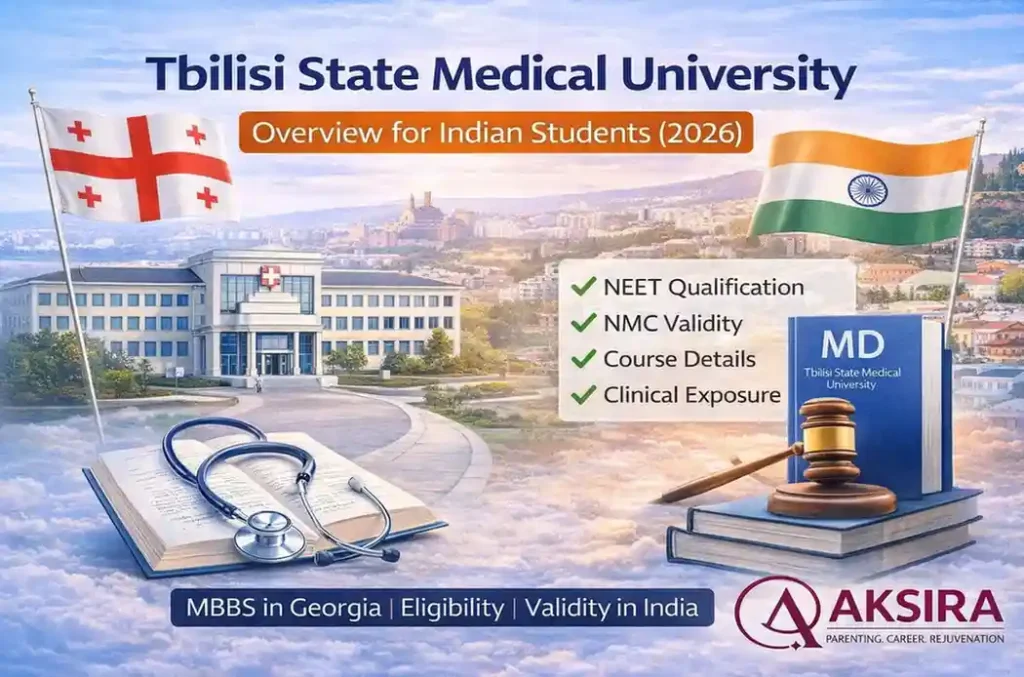
Tbilisi State Medical University Complete Overview for Indian Students (2026)
Tbilisi State Medical University – Overview
Tbilisi State Medical University (TSMU) Overview is the oldest, most academically rigorous medical university in Georgia and one of the most trusted choices among Indian students seeking MBBS abroad. Established in 1918, the university represents the gold standard of government medical education in Georgia, with a strong focus on discipline, clinical fundamentals, and medical ethics.
This detailed overview explains what makes TSMU different, who should choose it, who should not, and how it fits into India’s NMC + FMGE/NExT framework.
University Background & Academic Standing
TSMU is a public, government-funded medical university operating under Georgia’s Ministry of Education and Science. Unlike many private institutions that primarily focus on international recruitment, TSMU’s core strength lies in academics, research, and hospital-based training.
Key points:
- Over 100 years of medical education
- Thousands of graduates practicing across Europe, Asia, and the Middle East
- Strong collaboration with public hospitals and research institutes
- Reputation built on academic credibility, not marketing
This is why TSMU consistently attracts serious medical aspirants, not students looking for shortcuts.
MBBS / MD Program Structure
At TSMU, international students enroll in the MD (Doctor of Medicine) program, which is academically equivalent to MBBS in India.
Program Overview:
- Total Duration: 6 years
- 5 years academic education
- 1 year compulsory clinical internship
- Medium of Instruction: English
- Degree Awarded: MD (equivalent to MBBS)
- Curriculum Standard: European medical education framework
Academic Progression:
- Years 1–2: Basic medical sciences (Anatomy, Physiology, Biochemistry)
- Years 3–4: Pathology, Pharmacology, Microbiology, Clinical basics
- Years 5–6: Clinical medicine, surgery, pediatrics, gynecology, internship
The structure is theory-heavy initially, followed by progressive clinical immersion.
Recognition, Validity & NMC Compliance (Critical Section)
For Indian students, this is the most important aspect.
TSMU:
- Is listed in the WHO World Directory
- Meets NMC eligibility requirements when rules are followed
- Allows graduates to appear for FMGE / NExT in India
However, validity depends on student compliance, not just the university.
To remain valid in India, students MUST:
- Qualify NEET before admission
- Complete the full 6-year course
- Study entirely in English
- Complete internship as part of the degree
- Clear FMGE / NExT after graduation
TSMU supports compliance, but it does not bypass Indian regulations.
Clinical Exposure & Teaching Hospitals
TSMU is known for structured, hospital-based clinical exposure, especially in comparison to many private universities.
Clinical training includes:
University-affiliated government hospitals
Large public hospitals in Tbilisi
Department-wise clinical rotations
Emphasis on diagnostics, patient history, and observation
Clinical exposure becomes meaningful from the 3rd year onwards.
This is not luxury exposure, but real-world public healthcare exposure, which is valuable for licensing exam preparation.
Faculty, Teaching Style & Academic Discipline
Faculty at TSMU includes:
- Senior professors with PhD/MD backgrounds
- Clinicians actively practicing in hospitals
- Researchers involved in medical publications
Teaching style is:
- Lecture-based with strict attendance
- Regular internal assessments
- Less spoon-feeding, more self-responsibility
Students who lack discipline may struggle. TSMU expects maturity.
Eligibility Criteria for Indian Students
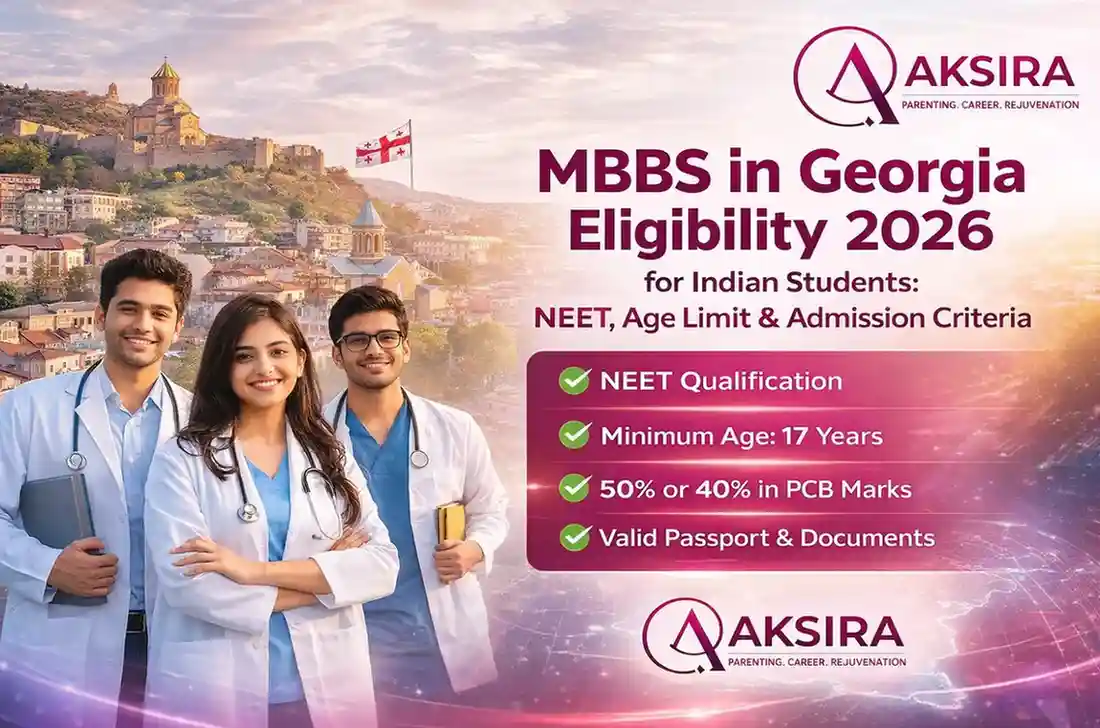
Minimum eligibility:
- NEET qualified (mandatory)
- 50% PCB (General category)
- 40% PCB (Reserved category)
- Minimum age: 17 years
There is no university-level entrance exam, but academic screening is strict.
Fee Structure & Cost Reality
TSMU is not a low-cost MBBS destination.
- Tuition fees: Mid to high range for Georgia
- Living expenses: Moderate (Tbilisi is affordable but urban)
- No donation or capitation fees
Students choosing TSMU should prioritise academic quality over lowest cost.
Student Life, Safety & Indian Community
- Tbilisi is one of the safest cities in Eastern Europe
- Indian food and groceries available
- Indian student community present but not overcrowded
- Weather includes cold winters (adjustment needed)
Student life is academically focused, not entertainment-oriented.
Who Should Choose Tbilisi State Medical University?
Ideal for students who:
- Want a top government medical university
- Are academically serious and disciplined
- Plan long-term medical practice
- Are preparing for FMGE / NExT seriously
Not suitable for students who:
- Want the cheapest MBBS option
- Expect personal hand-holding
- Prefer relaxed academic systems
- Avoid academic pressure
TSMU vs Other Georgian Universities (Reality Check)
| Factor | TSMU | Private Georgian Universities |
|---|---|---|
| Reputation | Very High | Medium |
| Academic Pressure | High | Moderate |
| Cost | Medium–High | Low–Medium |
| Clinical Discipline | Strong | Variable |
| Stability | Very High | Depends |
Book Your Free Consultation Today.
Final Verdict: Tbilisi State Medical University – Complete Overview for Indian
Tbilisi State Medical University is one of the safest and most academically reliable MBBS options in Georgia — but it is not for everyone.
It rewards:
- Discipline
- Consistency
- Long-term planning
It punishes:
- Casual attitude
- Shortcuts
- Poor exam preparation
If your goal is a legally valid, academically solid MBBS degree, and you are willing to work for it, TSMU is a strong choice.
About the Author
This article is written by a medical education researcher and overseas MBBS consultant with extensive experience guiding Indian students through MBBS admissions abroad, eligibility verification, and NMC compliance.
Frequently Asked Questions Why Choose Tbilisi State Medical University?
Yes. Tbilisi State Medical University is listed in the WHO World Directory and is eligible under NMC regulations provided the student meets all NMC rules, including NEET qualification, course duration, and internship requirements.
Yes. The MD (Doctor of Medicine) degree awarded by TSMU is considered equivalent to MBBS in India for licensing purposes, as long as NMC guidelines are fully followed.
Yes. NEET qualification is mandatory for all Indian students. Without qualifying NEET, the MBBS/MD degree from TSMU will not be valid for medical practice in India.
The total duration is 6 years, which includes 5 years of academic study and 1 year of compulsory clinical internship, in line with NMC rules.
The medium of instruction for international students is English. Basic Georgian language training is provided to help students communicate with patients during clinical practice.
Yes. TSMU offers structured clinical exposure through government and university-affiliated hospitals in Tbilisi, especially from the 3rd year onwards. The exposure is realistic and academically focused.
Yes. Indian students must clear FMGE (currently) or NEXT (upcoming) to obtain medical registration in India after graduating from TSMU.
Yes. Tbilisi is considered a safe city for international students, with low crime rates and a supportive environment for foreign medical students.
TSMU is ideal for students who are disciplined, academically serious, and willing to prepare independently for licensing exams. It is not suitable for students seeking an easy or low-pressure MBBS program.
Get Personalized Budget Plan
-
 NEET Score Calculator 2026 | Calculate Marks Out of 720
 -
 Is MBBS in Uzbekistan Really Cheap? Real Cost Guide for Indian Students (2026)
 -
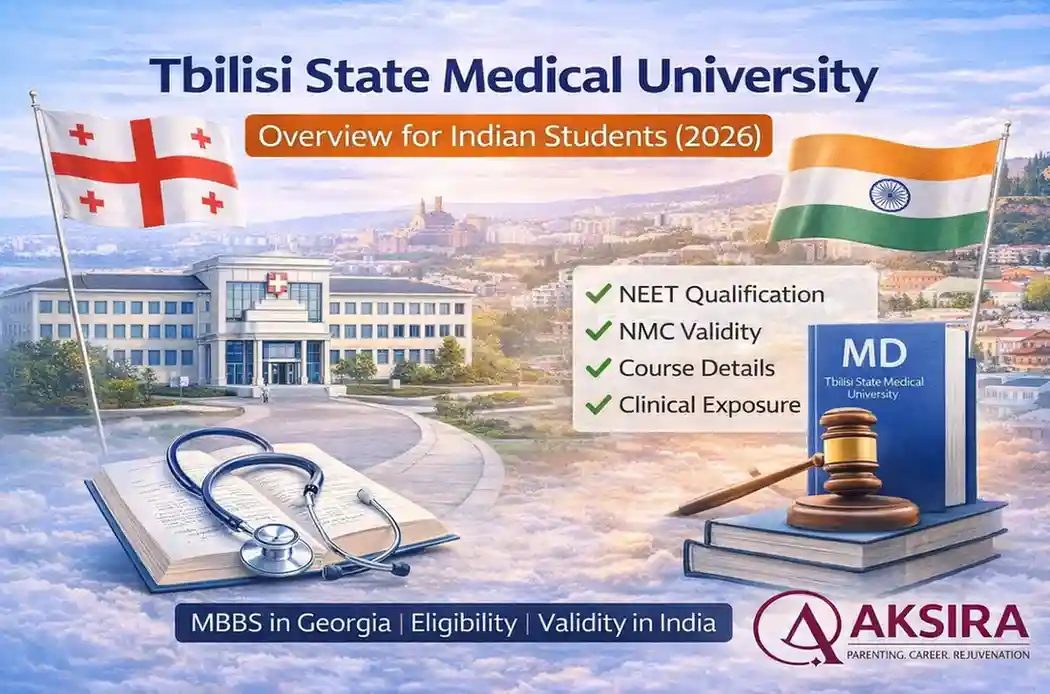 Tbilisi State Medical University – Overview for Indian Students (2026)
 -
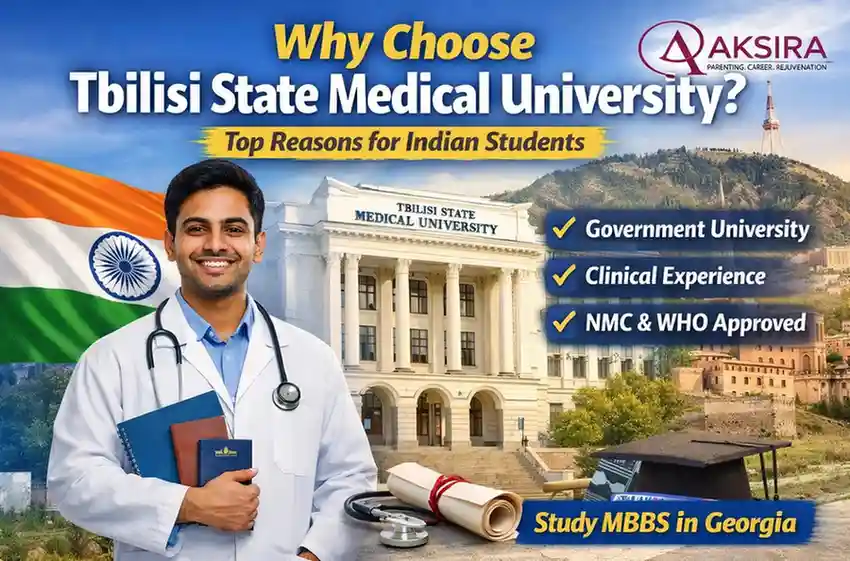 Why Choose Tbilisi State Medical University? Fees, Admission & Honest Review (2026)
 -
 MBBS in Georgia Eligibility 2026 for Indian Students – NEET, Age Limit
 -
 What Is MBBS in Georgia? – Complete Guide, Fees, Eligibility
 -
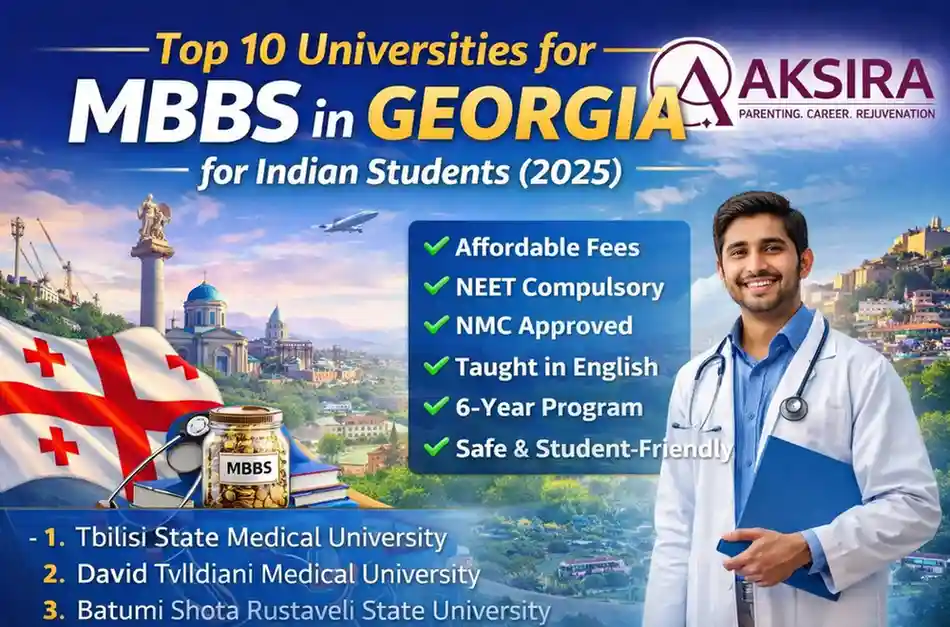 Top 10 universities for MBBS in Georgia for Indian Students
 -
 How to Pick the Right Course and College Abroad
 -
 Top Scholarships for Indian Students to Study Abroad
 -
 Big Mistakes Students Make While Planning to Study Abroad